Creator Economy Trends 2026: What's Actually Changing
Summary
The creator economy is on track to exceed $323 billion in 2026, but the real shift is not in market size: it is in who captures the value. This overview covers six trends rewriting how independent creators monetize: direct fan revenue, AI-assisted engagement, community-led subscriptions, micro-niche positioning, digital product diversification, and platform-independent audience ownership. If you want to keep more of what you earn, this is where to focus.

Six creator economy trends 2026 analysts agree on: the market hits $323 billion this year, yet more than half of all creators earn under $15,000 annually. That gap is not random. It separates creators who sell directly to their fans from those who still depend on ad revenue. These six shifts explain what is actually changing right now and which side of that gap you end up on.
The $323 Billion Number Is Not the Story
The creator economy market is projected at $323 billion in 2026, growing at 26.5% year over year. Every headline leads with this figure. But the number hides a brutal reality: more than 200 million people identify as creators, and fewer than 4% of them earn more than $100,000 per year.
The market is enormous. The distribution of value inside it is not.
What that 26.5% growth actually tracks is the expansion of the top layer: creators who figured out how to stop depending on ad revenue and brand deals, and started building recurring revenue from their fans directly. The platforms are still growing. But the creators doing well are the ones treating those platforms as a discovery layer, not as a business model.
If your strategy in 2026 is still "grow on YouTube then monetize later," you are building on a foundation someone else controls. The shift underway is from renting an audience to owning one.

88% of Serious Creators Now Charge for Memberships
According to Circle's 2026 creator economy report, 88% of creators who earn a sustainable income use paid memberships as their primary revenue stream. That is up from 54% in 2025, a 34-point jump in one year.
The reason is straightforward: memberships are recurring. A brand deal pays once. A subscriber at $35 per month pays every month, with no negotiation, no deliverable review, no invoice chasing.
Conversion from free audience to paying members runs at 2-5% depending on the niche and the offer. That sounds low, but the math works fast. A creator with 10,000 engaged followers converting at 3% with a $35 monthly tier is looking at $10,500 per month in recurring revenue, with no brand deals required.
The pricing sweet spot in 2026 is $26-50 per month, which is where most sustainable communities sit. Below $15, the offer needs to carry massive volume to matter. Above $100, the audience becomes much smaller and the value proposition has to be almost irrefutably specific.
What changed in 2026 is not that memberships are new. It is that creators stopped treating them as a bonus income stream and started treating them as the business.
AI Handles the Repetitive Work: Not the Way You Think
More than 84% of creators use AI tools in their workflow. If you read that stat as "everyone is using AI to produce more content faster," you are already behind the curve on what AI actually does for creator income in 2026.
The shift is from content output to fan engagement. AI tools are being used not to write more posts, but to respond to fans at scale, personalize the experience for paying members, and reduce the hours spent on tasks that do not directly generate revenue.
Here is what that looks like at the usage level: a creator with 800 paying subscribers cannot manually respond to every message. AI-assisted responses, voice notes, and personalized onboarding sequences mean that subscriber gets a real reply without the creator being available 24 hours a day. The result is lower subscriber loss, which matters far more than subscriber acquisition at that stage.
AI tools also handle caption writing, video repurposing, email sequences, and FAQ responses. That time goes back into creating the content or offer that only that creator can produce. AI does not replace the creator. It removes the tasks that were making the creator less creative.
The Micro-Niche Creator Is Outperforming the Generalist
In 2025, the standard advice was to niche down to grow faster. In 2026, the data shows something more specific: the micro-niche creator with 2,000 highly targeted paying subscribers is generating more net income than the broad creator with 500,000 followers who monetizes through ads.
Why? Because specificity commands price. A creator who covers personal finance for freelance translators can charge $49 per month for that exact audience. A creator who covers "personal finance" for everyone charges $8 per month and competes with every personal finance newsletter on the internet.
The micro-niche playbook in 2026: identify the intersection of a topic you know deeply and an audience that has a specific, underserved problem. Build your free content to attract that exact person. Convert them with a membership offer that solves the specific thing they cannot solve anywhere else.
The ceiling on micro-niche revenue is lower, but the floor is much higher, and the work required to reach it is far more sustainable.
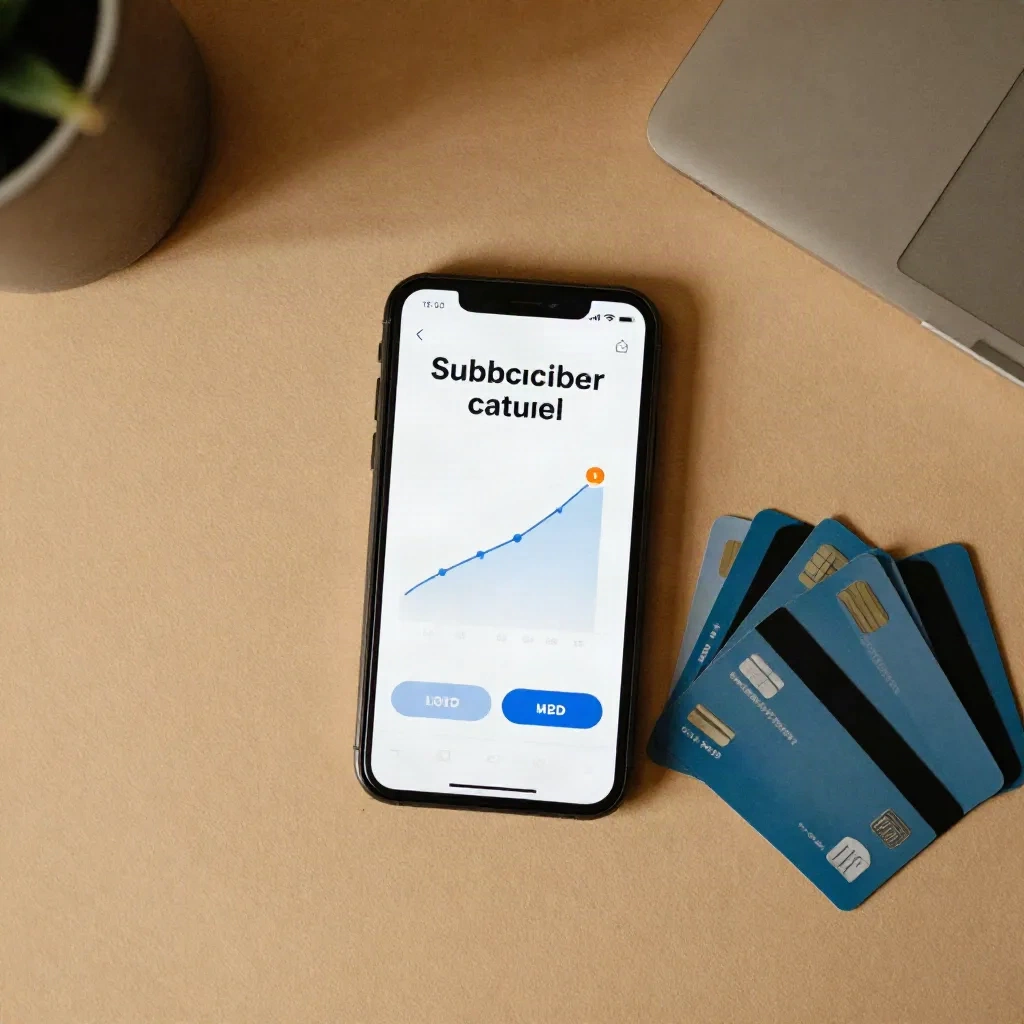
Community-Led Revenue: From Audience to Paying Members Without Middlemen
The vocabulary around "community" has been so diluted that it stopped meaning anything useful. So here is the 2026 version with actual numbers: a community is a space where your fans interact with each other, not just consume your content. When that space has a paywall, it becomes a business.
The creators building the most resilient revenue in 2026 are doing it through community structures: not because community is a trend, but because it solves the subscriber loss problem that kills every membership business.
When a subscriber is part of a community, leaving means losing access to the other members, not just to the creator's content. That changes the calculation entirely. According to data from Circle's creator report, 69% of creators who prioritize member-to-member connection as a growth strategy see lower subscriber loss than those who focus only on content.
The practical shift: stop building a content library that people can archive and leave. Start building connections between your paying members that they cannot replicate anywhere else. Run monthly live calls. Create a group where your best subscribers talk to each other. Facilitate the introductions.
This requires almost no additional production budget. It requires a different way of thinking about what you are selling.
Selling Digital Products: The Model That Outlasts Sponsorship Deals
In 2026, 37% of creators sell digital products, up from 22% two years ago. The growth is not accidental. Digital products solve three problems that sponsorship deals do not: they are repeatable, they are owned entirely by the creator, and they compound.
A course you build once can sell for three years. A template pack you design once can reach a new buyer every week. A sponsorship deal pays once and is never mentioned again.
The creators building serious income in 2026 typically combine memberships with at least one digital product. The membership covers recurring revenue and keeps fans close. The digital product serves a one-time, high-intent buyer who is not ready for a recurring commitment but is willing to pay $79 for a specific outcome.
The real difference between a digital product that sells and one that does not is specificity of the promised outcome. "A guide to social media" does not sell. "A 14-day content calendar for Substack writers who want to hit 500 subscribers" sells.
Platform Independence Is the Whole Strategy Now
Here is what your algorithm does not tell you: your follower count is not yours. Your reach is not yours. Every change in the recommendation system, every policy update, every format shift: it lands on your business without your consent.
The real cost of a platform is rarely the 30% commission displayed in the terms. It is the dependency on a system that can reduce your visibility, monetize your audience without sharing revenue with you, and change the rules of the game after you have already built on top of it.
The creator economy trend that defines 2026 is not a new tool or a new format. It is the structural decision to stop building on rented land. That means owning an email list. It means having a direct payment relationship with your fans. It means your business does not depend on an algorithm deciding how many people see your next post.
Creators who built platform-independent revenue in 2024 and 2025 are the ones who are not panicking in 2026 when the next algorithm change hits. The ones who didn't are building now, because the alternative is starting over every time a platform pivots.

The Creators Worth Watching in 2026 Have One Thing in Common
They sell directly to their fans. They have a paying membership, at least one digital product, and an email list that is theirs regardless of what any platform does next. They use AI to handle the tasks that do not require their specific knowledge or voice. And they have positioned themselves so specifically that their audience cannot easily find an alternative.
None of this is reserved for creators with large followings. A creator with 3,000 highly targeted subscribers, a $39 monthly tier, and a $99 digital product can generate $117,000 per year, with no brand deal or algorithm dependence.nce.
That is the creator economy trend worth tracking in 2026. Not the market size. The mechanism.