Creator Economy Trends 2026: What's Actually Changing
Summary
The global creator economy reached $310 billion in 2026, but 50% of creators still earn under $15,000 a year. Brand deals fell 14% year-over-year while memberships rose. AI tools are now used by 84% of active creators. The six trends that define 2026: market concentration, real platform costs, brand deal decline, AI productivity, subscription primacy, and direct audience ownership. The metric that matters is the share of income that does not depend on an algorithm.
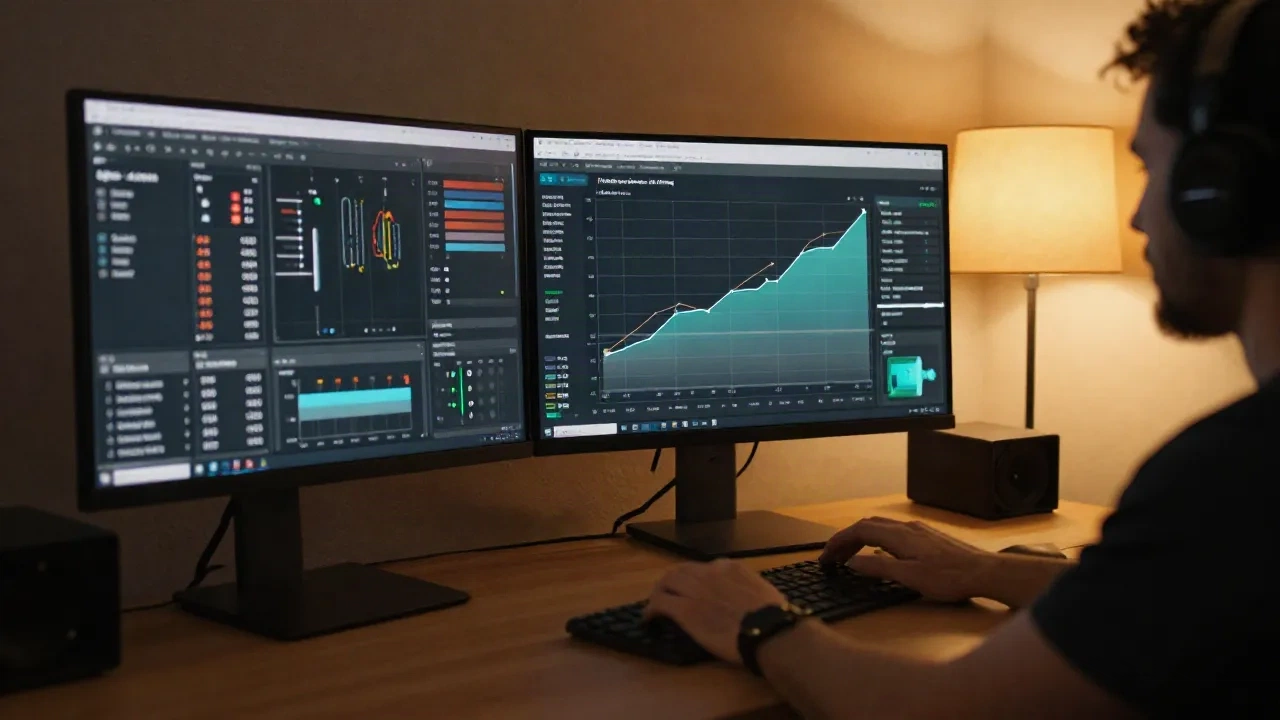
The creator economy trends 2026 data confirms are not the ones most headline articles focus on. The market crossed $310 billion. Only 4% of creators earn over $100,000 annually. Brand deals fell 14% year-over-year. AI tools reached 84% adoption. These six trends shape how independent creators earn, retain fans, and protect their business from platform risk this year.
This analysis covers six documented trends reshaping how independent creators earn money, retain fans, and protect their business from platform risk in 2026. Not predictions. The data.
The $310 Billion Market That Still Fails Most Creators
The headline number is deceptive. The global creator economy exceeds $310 billion in 2026, yet more than 50% of active creators earn under $15,000 per year from their content. Only 4% cross the $100,000 threshold.
The market is not small. The distribution is broken.
Three platforms (YouTube, TikTok, Instagram) capture the vast majority of audience attention while retaining 45-55% of ad revenue or controlling which content reaches which audience. The money exists in the market. The question is what share of it actually reaches the individual creator.
This is the structural reality of the creator economy in 2026: market growth and creator income are moving in different directions for the majority of people building a creative business. The gap does not close automatically. It closes when creators shift from being publishers on someone else's platform to running a direct revenue channel they control.
The most useful reframe for 2026 is not asking how big the market is. It is asking what percentage of that market you can access without an algorithm deciding to show your content today.
Platform Fees Are Costing More Than the Percentage on the Label
Platform fees are rarely what they appear to be when you read the pricing page.
Patreon charges between 5% and 12% of subscription revenue depending on your plan tier. OnlyFans takes 20%. YouTube retains 45% of ad revenue. Add payment processing fees at typically 2.9% plus $0.30 per transaction, currency conversion on international subscribers, and algorithm changes that can cut your effective reach by 30% in a single week, and the real cost is consistently higher than what any pricing page advertises.
One number that clarifies the economics: Patreon reported 279,000 paying creators distributing approximately $24 million monthly in late 2024. That works out to an average of $86 per creator per month before fees. Not per subscriber. Per creator. The math tells a clear story about where platform-native monetization lands for most creators.

The platforms growing fastest in 2026 combine lower commission rates with creator-owned subscriber data. The fee structure is not the only cost. Access to your own audience data (emails, payment history, subscription preferences) is worth as much as the percentage difference. It is what lets you survive a platform shutting down a monetization feature or changing its terms without warning.
What you pay in fees is visible. What you pay by not owning your subscriber data is invisible until it becomes urgent.
Why Brand Deals Are No Longer Your Most Reliable Income Source
Brand sponsorship revenue dropped 14% year-over-year in 2026. That single data point reshapes the income strategy for most mid-tier creators, and the decline is structural rather than cyclical.
Brands have shifted significant budget toward Meta's Creator Fast Track program and YouTube's scaled brand-deal infrastructure. The money increasingly flows through platform-controlled systems rather than direct creator negotiations. In March 2026, Meta reported paying content creators nearly $3 billion through monetization programs in 2025, a 35% increase year-over-year. That is real money. It also comes with real conditions: algorithmic distribution control, content moderation filters, and no portability of your subscriber relationships if you decide to move platforms.
For creators with under 100,000 followers, the practical implication is direct. Brand deals that were accessible at 50,000 subscribers in 2023 now require closer to 150,000 or engagement benchmarks that are harder to hit as platforms continue to expand their creator supply. The ceiling on brand deal income per creator is falling while the number of creators competing for those deals is rising.
The creators whose income has stayed stable or grown in 2026 are the ones who treated brand deals as supplementary income rather than primary revenue. They are diversified across subscriptions, digital products, and direct community access. A brand partnership is a welcome addition when the terms align, not the foundation they would collapse without.
That is a meaningful operational difference in how you make decisions about what to create, how often to publish, and which platforms to invest time in.
AI Handles Repetitive Tasks, But Your Relationship With Fans Does Not Scale the Same Way
84% of active creators now use at least one AI tool regularly in 2026. The most common applications: thumbnail generation, caption drafts, script outlines, email subject line testing, and subscriber churn prediction on membership platform data.
What AI has not solved is the core reason someone stays subscribed to a creator for three consecutive years. That is still about specific expertise, a consistent point of view, or the sense of direct access to someone with relevant experience on a topic that matters to you. Those things do not come from a language model output.
The practical effect of AI adoption in 2026 is a 3 to 5 times increase in production speed for creators who use it systematically. A solo creator who previously published two videos per month now publishes five, with better thumbnail click-through rates and more consistent metadata across uploads.
That efficiency gain is significant. It also means that differentiation on production quality alone is no longer defensible. In 2026, polished thumbnails and clean audio are table stakes. The creators gaining subscribers are gaining them on specificity of topic and the directness of the creator-fan relationship. AI does handle the repetitive production work. The relationship is still yours to build.
The creators misusing AI in 2026 are the ones using it to manufacture volume without a distinct point of view. The output is detectable to regular readers, and it erodes exactly the trust that makes someone pay for access to your content.
The Subscription Model Has Moved From Option to Foundation
Paid subscriptions are now the primary revenue foundation for most community-led creator businesses in 2026. The numbers support this: 42.6% of creators use paid memberships as a primary monetization channel, nearly matching ad-revenue programs at 48.3% and live streaming at 49.5%.
The reason this shift matters is concrete. A subscription generates recurring monthly revenue. A brand deal does not. A YouTube ad payout fluctuates with CPM rates that have been volatile for mid-tier channels. A subscriber who pays $8 per month for access to your newsletter, private community, or exclusive content series represents income you can budget around. It does not disappear when an algorithm changes.
The creators who built stable businesses in 2026 typically operate a three-tier structure: a free public tier on a discovery platform for audience acquisition, a paid direct tier they control for revenue, and a higher-access option for a smaller number of highly engaged fans. The free tier is acquisition. The paid tier is the business.
Two data points on what free-to-paid conversion looks like in practice: industry benchmarks consistently place the rate at 2 to 5% for creators who actively communicate the value of their paid tier. For a creator with 10,000 newsletter subscribers, that translates to 200 to 500 paying members. At $8 per month, that is $1,600 to $4,000 in monthly recurring revenue before a single brand deal or ad payout.
The math changes the way you think about which platforms to prioritize. A platform that helps you convert 3% of 10,000 readers into paying members is worth more than a platform that gives you 500,000 views with no pathway to direct payment.
Audience Ownership Is the Only Hedge Against Algorithm Risk
In 2026, the most important question you can ask about your income is not how many subscribers you have. It is how many of them you own.
An email subscriber is yours. A Substack subscriber is mostly yours: Substack takes 10% and you retain direct email access to every paying reader. A YouTube subscriber is not yours. Instagram followers are not yours. If those platforms change their algorithm, restrict a monetization feature, or introduce a new fee tier, your audience is still sitting on their infrastructure. You are a tenant on someone else's property.

The practical move is to treat your public platform presence as a funnel, not a destination. Every piece of public content should point toward a direct relationship: an email list, a paid membership, a private podcast feed, or a direct community. The channel that sends you traffic is not the channel where you build your business.
What has changed in 2026 is not the principle. It is the cost of ignoring it. Platform consolidation is accelerating. The number of platforms offering meaningful ad-revenue sharing for mid-tier creators has not grown substantially. The number of creators competing for that revenue has. The window for building a platform-native income without diversification is narrowing, and the creators who have already moved to owned-audience models are in a significantly better position than those who have not.
What 2026 Rewards Compared to What 2025 Did
The pattern across the data is consistent: 2026 rewards specificity, direct monetization, and owned audiences over reach alone, brand dependency, and platform-native income.
The creator who built a business on a single YouTube channel with 500,000 subscribers and three brand deals per month is more exposed than they were two years ago. The creator with 8,000 email subscribers and a $10 per month membership converting at 4% earns $3,200 in predictable monthly recurring revenue before any brand deal or ad payout.
A 2024 analysis by Goldman Sachs projected the creator economy could approach $480 billion by 2027, while explicitly flagging income concentration and platform dependency as the two structural risks for individual creators. Those risks have not gone away in 2026. The window to address them is still open, but it requires moving before the next algorithm change forces the conversation.
In 2026, YouTube committed to expanded monetization surfaces including AI-enabled Shorts creation and in-app shopping. More than 500,000 creators are already using YouTube Shopping. Those are real opportunities. They are also opportunities that depend entirely on YouTube deciding to keep them available, at those terms, for as long as you need them.
The metric worth tracking is not your subscriber count on any single platform. It is the percentage of your monthly income that does not depend on an algorithm to reach the people paying it.
That percentage is the actual measure of your business health in 2026.