How to Build an AI UGC Agency Without a Studio or a Team
Summary
An AI UGC agency sells brands AI-generated, User Generated Content style video ads built with an actor library, a cloned voice, and a script instead of a camera crew. Solo operators charge $1,500 to $5,000 a month in retainers, running the whole workflow from a laptop. This guide covers what it costs to start, how to price it, which four tools carry the workload, and the AI actor licensing trap that trips up most beginners in their first client contract.

An AI UGC agency is a service you run for brands: AI-generated, User Generated Content style video ads, built with an actor library, a cloned voice, and a script, instead of a camera crew and a shipped product sample. You do not need a studio. You do not need 10,000 followers of your own. You need one client willing to pay $1,500 to $5,000 a month for a steady drop of scroll-stopping video variants, and a laptop that can run three or four AI tools in sequence. This guide breaks down what the work actually looks like, what it pays in mid-2026, the four-tool workflow behind it, and where the AI UGC agency model quietly falls apart if you skip the fine print.
What an AI UGC Agency Actually Sells
You already own the skill. Years of writing hooks, timing a cut, and knowing what makes someone stop scrolling do not disappear just because the face on screen is synthetic. An AI UGC agency repackages that instinct as a repeatable service: instead of one video for one brand deal, you deliver a batch of ten, twenty, or fifty variants a month.
The client is not paying for a single asset. They are paying for testing volume: different hooks, different AI actors, different languages, run against ad spend to find the two or three that convert. Your job is direction and quality control, not filming.
This is a real shift from the freelance UGC model most creators already know. A one-off brand deal pays once and ends. A retainer client pays every month for a pipeline, which is a completely different kind of income, closer to what independent creators already chase when they move off platform payouts and toward direct billing.
The buyers are not glamorous either. Most early clients are small DTC brands, local service businesses, or SaaS tools running paid social, not the household names you would tag in a portfolio. They care about cost per acquisition, not creative awards.
That distinction matters when you are deciding whether this fits your own following. A creator whose audience already trusts their taste in a category, skincare, gadgets, fitness gear, B2B software, has a running start on a client roster no marketplace listing gives you. The niche you built for free is the same niche a brand in that category is trying to reach.
The Pricing Table Everyone Copies (and the Math Behind It)
Every AI UGC pricing guide online quotes roughly the same numbers, so here they are once, with the part most of them skip: what it actually means for one person running the business alone.
Raw AI UGC footage runs $50 to $350 per finished video depending on script complexity and actor licensing, against $150 to $1,000 for a traditional creator shoot. That gap is the entire pitch: a brand testing twenty hook variants a month cannot afford twenty human creators, but it can afford twenty AI renders.
Retainers cluster into two tiers. A starter package (roughly 15 videos a month) lands between $1,500 and $2,500. A growth package (30 or more videos) runs $3,000 to $5,000. A 2026 UGC rates breakdown puts full-service agency retainers even higher, $300 to $800 or more per variant, with realistic monthly testing volume landing between $2,000 and $10,000 depending on the tier.
Run the math on a single $3,000 retainer: roughly $150 to $250 in platform subscriptions, ten to twelve hours of your time for scripting, generation, and review. That is close to $250 an hour once the workflow is dialed in, which is a very different number from the $75 a beginner traditional UGC creator charges per finished video.
Two clients at that retainer replace a decent day job. Four clients, run by one disciplined person with a system instead of a scramble, is an agency, not a side hustle.
The number that matters more than the retainer size is renewal. A brand that keeps paying month three is worth more than three brands that each churn after month one, because your real cost is the time spent onboarding, not the time spent generating. Price the first month as a trial and the second month at your real rate once you know the account is a keeper.
Skip the Marketplaces. Your Following Already Trusts You More Than a Queue Does
Most beginner guides point you at UGC marketplaces like Billo, Insense, or JoinBrands to build a portfolio first. Skip that step if you already have an audience, even a small one.
Marketplaces put you in a bidding queue against hundreds of other sellers, and the AI tools that make production cheap also make undercutting easy. Pricing there trends toward the floor within a few months, and you end up competing on speed instead of judgment.
What your algorithm never tells you is that the brands you already tag, mention, or use on camera are warmer leads than any marketplace listing. A direct message referencing a specific product you actually use converts better than a generic portfolio link, because you are pitching from inside the niche, not applying from outside it.

Cold outreach to strangers on a marketplace is a numbers game you will likely lose early on. Warm outreach to five brands you can speak about with real detail, priced at a full retainer instead of a per-video rate, is a business.
The pitch itself should never open with price. Open with a sample: one finished 15-second variant built around a hook specific to that brand, sent unprompted, followed by the retainer offer once they have already watched something good. Showing beats describing every time.
The Toolkit: Four Tools, One Laptop, One Afternoon
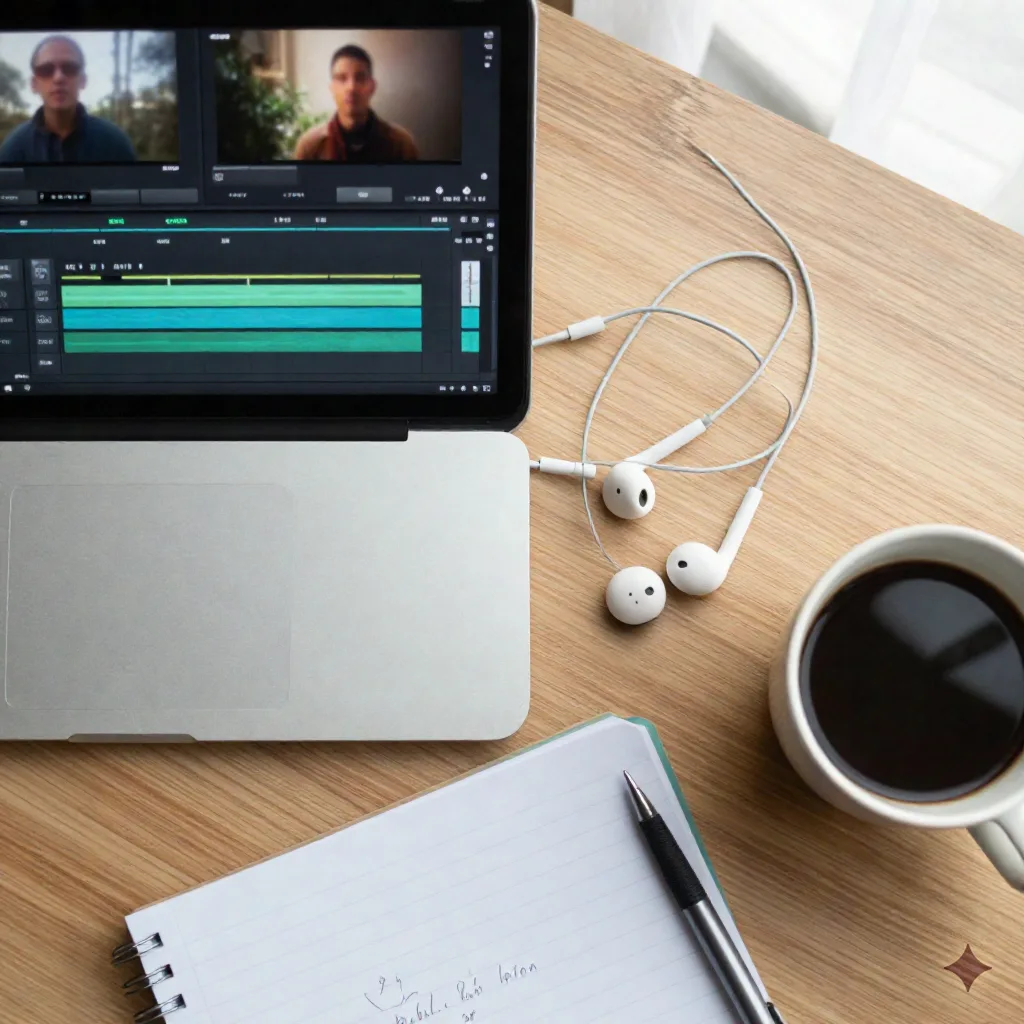
The workflow behind most AI UGC agencies collapses into four steps, and none of them require rendering hardware or a production crew.
Start with the actor. You need a reusable, licensed AI presenter that will not have you re-generating a new face for every script, so the same performer can carry a client's entire month of variants with a consistent look.
Next comes scene assembly: turning a script or a product link into a full multi-scene video shell, hooks and transitions included, before you touch a single cut. This step is where most of the ten-to-fifty-variant volume actually gets produced.
Voice is where most beginners overspend. A cloned or synthetic voice that does not sound like a call center script is non-negotiable, and you do not need the most expensive option on the market to get there.

The last mile is captions, pacing, and export presets for each ad platform's exact aspect ratio. This is the one step where a general editor still beats an all-in-one AI suite, because client feedback rounds happen here and a general tool lets you turn revisions around fast.
Four subscriptions, one afternoon of setup, and a repeatable pipeline you can run for every new client without relearning anything. Build the pipeline once on your own test brand before you sell it, so the first client-facing batch is not also your first attempt.
The AI Actor Trap Nobody Warns You About
Here is the mistake that ends AI UGC agencies before they hit their second client: cloning your own face or voice and using it across every brand you work with.
The first client who books an exclusivity clause, standard in most retainers past $2,000 a month, will notice their competitor's ad running with the same synthetic face a week later. That conversation does not go well, and it is entirely avoidable.
Use a licensed actor library, not your own likeness, for anything client-facing. Keep your real face and voice for your own audience, where ownership and trust actually matter to you, and where the value of being recognizable actually pays off.
Disclosure rules are also tightening across ad platforms in 2026. Meta and TikTok both require labeling for synthetic or AI-generated actors in paid ads. Build that label into your delivery template from day one instead of retrofitting it after a client asks why an ad got flagged.
There is a second, quieter trap: reusing the exact same script structure across every client because it worked once. Brands compare notes in the same industries. A hook that feels custom the first time reads as templated the third time it shows up in a competitor's feed.
Should You Actually Start One?
Worth it if you already have a workflow you trust, a short list of brands you could pitch tomorrow without cold outreach, and the patience to run one client for a full month before expanding. The margin math works. The tooling is a solved problem. The bottleneck is entirely on the sales side, not the production side.
Skip it if the plan is to undercut every marketplace listing on price. That race has no floor, and the tools that make you cheap make everyone else cheap too.
Start with one retainer client at $1,500 to $2,000, run a full four-week cycle, and track your actual hours against the number above. If the hourly math holds once the reporting and revision rounds are counted, take on a second client. If it does not, fix the workflow before you fix the sales pitch.
None of this replaces owning your own audience, and it should not try to. Treat an AI UGC agency as a second, client-funded income line that runs on its own schedule, separate from whatever you are building with your own name and your own fans. The two feed each other: the client work pays the bills while the audience work keeps compounding on your own terms, not a platform's.