Substack Alternatives in 2026: 5 Platforms Compared
Summary
Looking for real substack alternatives in 2026? We compared beehiiv, Ghost, Kit, and Buttondown against Substack's 10% fee on price, revenue share, audience ownership, and growth tools, then scored each on public reviews. beehiiv comes out as the strongest all-round replacement for creators focused on monetization, Ghost wins on outright ownership, Kit fits creators selling products, and Buttondown suits writers who just want the simplest possible tool.
Substack alternatives are easy to find in 2026, but most only replace one part of what Substack does. beehiiv, Ghost, Kit, and Buttondown all promise the same core thing: get paid for your writing without a boss. The difference shows up in the math. Substack takes 10% of every paying subscriber's dollar, forever. The other four charge a flat software fee instead and let you keep the rest. Past a few hundred paying readers, that gap alone can run $500 to $5,000 a month, which is why beehiiv is the pick here if monetization is the goal, with Ghost, Kit, and Buttondown each fitting a narrower need.
The real cost of Substack's fee is invisible until you check
A creator charging $10 a month with 500 paying subscribers earns $5,000 a month in gross revenue. Substack takes $500 of that before Stripe even touches it. Run the same numbers on beehiiv's Scale plan and the software cost is about $78 a month, flat, no matter how the subscriber count moves that quarter.
This is not a reason to leave Substack on day one. A brand-new newsletter with 20 paying subscribers loses $20 a month to the fee, which is nothing next to the setup time a platform like Ghost demands. The fee becomes the deciding factor once a paid list crosses roughly 100 to 200 subscribers.
What you actually give up when you leave
Substack's Notes feed and Recommendations network send genuine organic readers to new writers, something none of the alternatives fully replicate yet. Leaving also means paid subscribers have to resubscribe with a new card on the new platform, since Substack does not export payment details.
That migration friction is real. Budget for a 10 to 20% drop in paid subscribers during any platform move, based on the migration threads creators have shared in beehiiv's own case studies and on Reddit.
The ownership question hiding under the fee debate
The 10% fee gets the headlines, but ownership is the bigger long-term issue for most creators. On Substack, the platform sits between a writer and every reader: it holds the email list, it holds the Stripe relationship for founding members in some cases, and its algorithm decides what shows up in Notes and Recommendations that day.
On beehiiv, Ghost, Kit, and Buttondown, the newsletter runs on the creator's own domain and the creator's own Stripe account from day one. That matters less at 50 subscribers. It matters a lot at 5,000, when a policy change or a suspended account can erase months of work overnight.
None of this makes Substack a bad starting point. It makes it a platform worth outgrowing on purpose, once the audience and the revenue justify the switch, rather than staying by default because moving feels like extra work.
Who should stay on Substack for now
A writer with 40 free subscribers and no paid tier yet has nothing to gain from migrating today. The fee only applies to paid revenue, and Substack's Notes feed genuinely helps a brand-new publication find its first readers faster than a blank beehiiv or Ghost site would.
The math changes once paid subscribers show up. A creator earning $800 a month from 80 paying readers is losing about $80 a month to Substack's cut, roughly the cost of a beehiiv Scale plan at that size. That is the point to start testing an alternative in parallel, not the point to panic-migrate everything overnight.
beehiiv: the platform built to replace Substack's growth loop
beehiiv is the newsletter platform to pick when growth is the point, not just publishing. It keeps 100% of subscription revenue, and its Boosts referral network and ad marketplace are the closest thing to Substack's discovery engine that any alternative has built.
The catch: those growth tools sit behind the Scale plan, roughly $49 a month once a list outgrows the free 2,500-subscriber tier. For a creator serious about turning a newsletter into a business, that is a fair trade.
Ghost: for creators who want to own the whole stack
Ghost is open source. Self-host it for free or pay Ghost(Pro) roughly $9 a month to skip the server work. Either way, the code, the data, and the design belong to the creator, with 0% taken from memberships.
The tradeoff is real: Ghost expects a creator to think like a publisher, not just a writer. There is no built-in discovery feed, so every new reader comes from the creator's own promotion.
Kit and Buttondown: two very different kinds of small
Kit, formerly ConvertKit, fits creators who sell something beyond the newsletter: a course, a template pack, a coaching call. Its free plan covers 10,000 subscribers, and its automation builder connects emails directly to product sales.
Buttondown is the opposite instinct: a clean Markdown editor for writers who want the smallest possible tool between them and their readers, with an open API for anyone who wants to build a custom workflow around it.
Which one to actually pick
Stay on Substack under 200 paying subscribers, when the built-in discovery matters more than the fee. Move to beehiiv when growth and monetization tools matter more than simplicity. Choose Ghost when owning the publishing stack outright is worth the extra setup. Pick Kit when the newsletter feeds a bigger creator business, and Buttondown when the goal is just to write.
At-a-glance
| beehiiv | Ghost | Kit (formerly ConvertKit) | Buttondown | |
|---|---|---|---|---|
| Starting price | Free up to 2,500 subscribers, Scale from ~$49/mo | From $9/mo managed, free to self-host | Free up to 10,000 subscribers, paid from ~$25-29/mo | Free up to 100 subscribers, paid from $9/mo |
| Platform cut on paid subs | 0% (Stripe processing fees only) | 0% (Stripe processing fees only) | 0% (Stripe processing fees only) | 0% (Stripe processing fees only) |
| Free plan limit | 2,500 subscribers, unlimited sends | Self-hosting is free indefinitely | 10,000 subscribers, unlimited broadcasts | 100 subscribers |
| Audience ownership | Full - your own site and your own Stripe account | Full - open source, you own the code and the data | Full - exportable list and tagging data | Full - Markdown export, open API |
| Built-in growth tools | Ad network, referral Boosts, deep analytics | Fast SEO-friendly site, no discovery network | Visual automation and commerce funnels | Minimal - no referral or ad network |
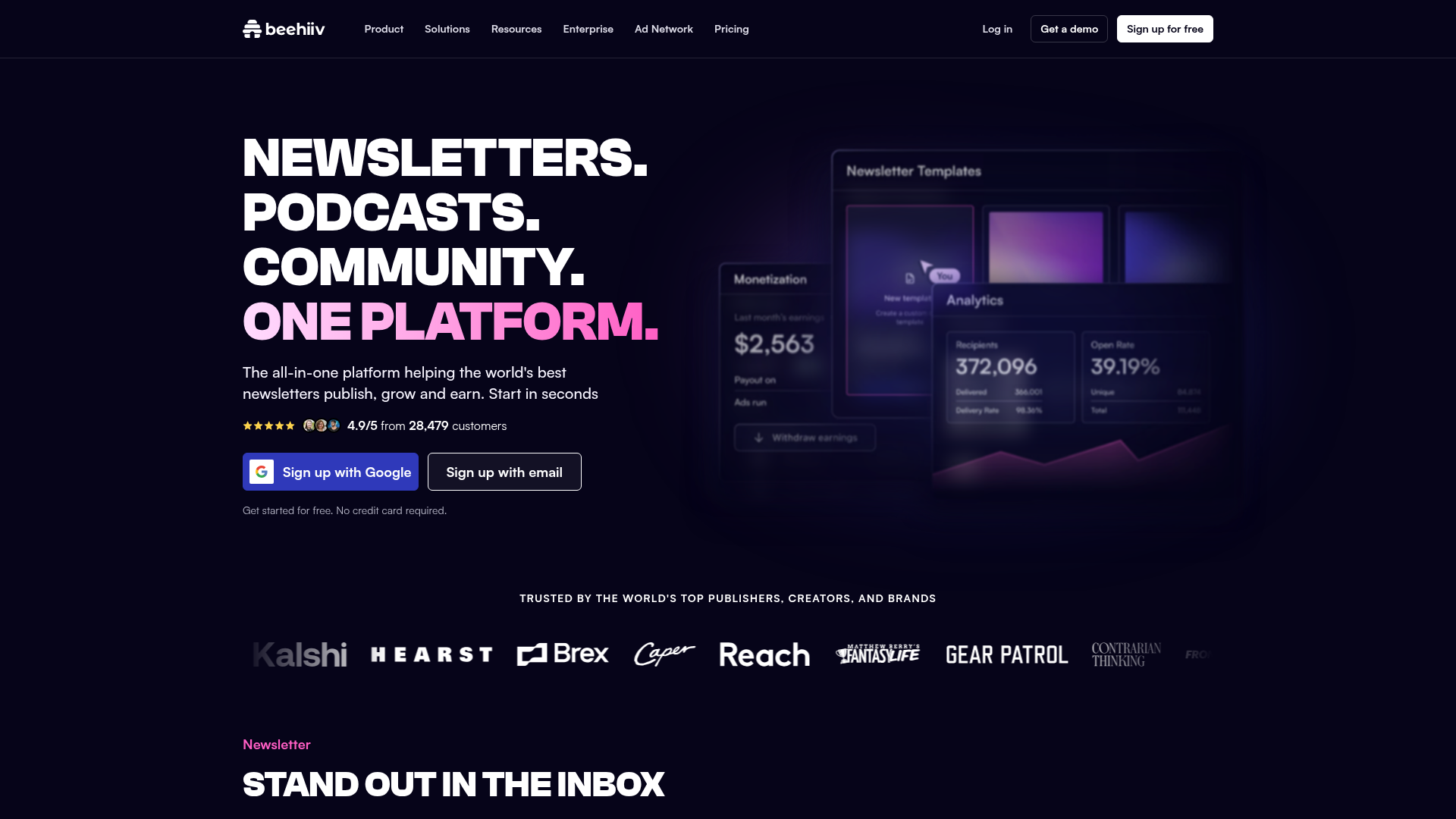
beehiiv
- Keeps 100% of subscription revenue, Stripe fees only
- Built-in ad network and referral boosts most alternatives lack
- Real owned website with proper SEO controls, not a shared template
- Ad network and referral program are locked behind the Scale plan starting around $49 a month
- More dashboard to learn than Substack's single-page editor
The most complete Substack replacement once monetization is the goal.
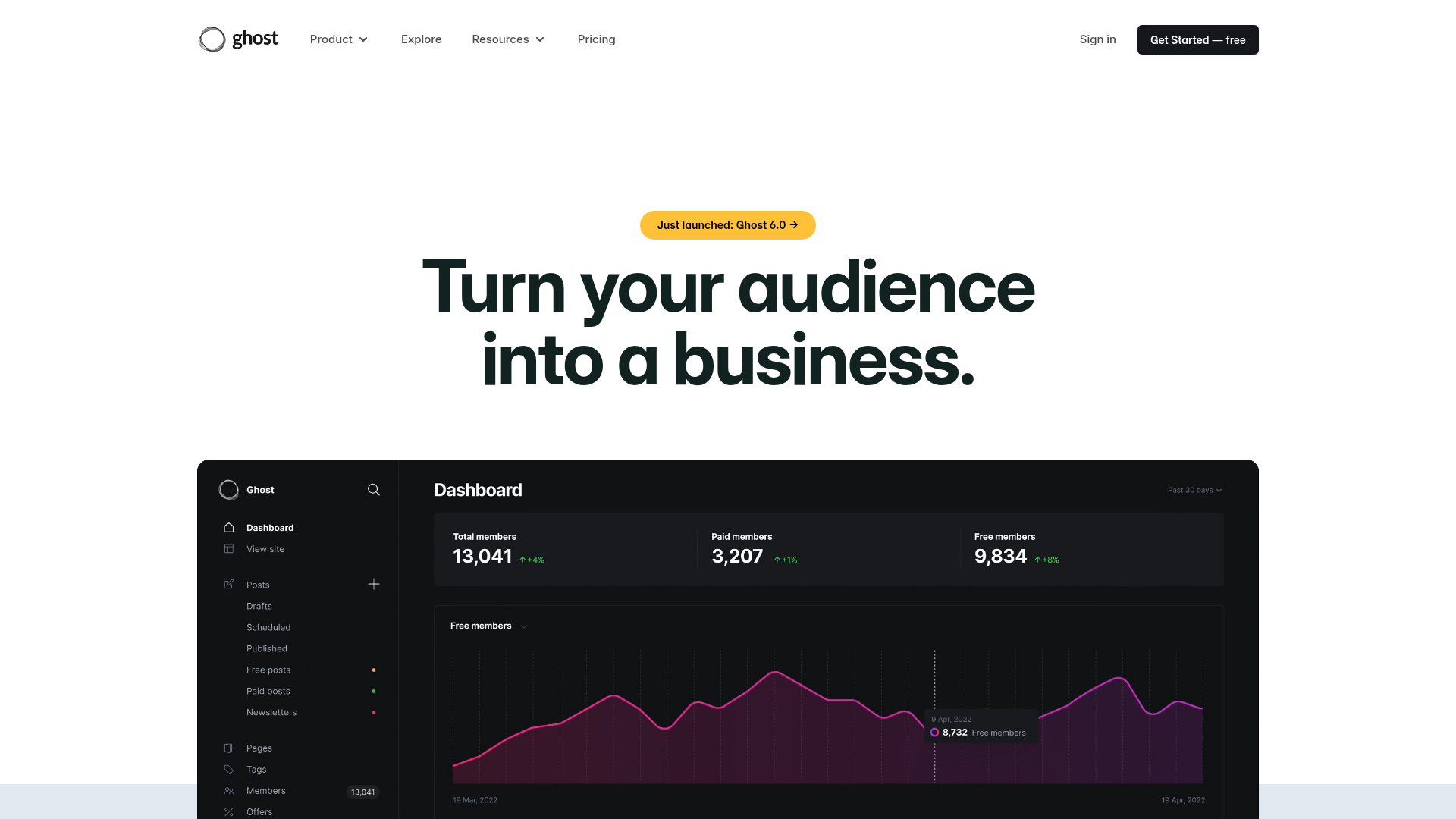
Ghost
- Open source, so the publication does not depend on one company staying in business
- 0% platform fee on memberships, Stripe fees only
- Consistently fast page loads that help organic search
- Self-hosting means someone has to handle servers and updates
- No built-in discovery network, so growth depends entirely on the creator's own promotion
Best when owning the publishing stack matters more than convenience.
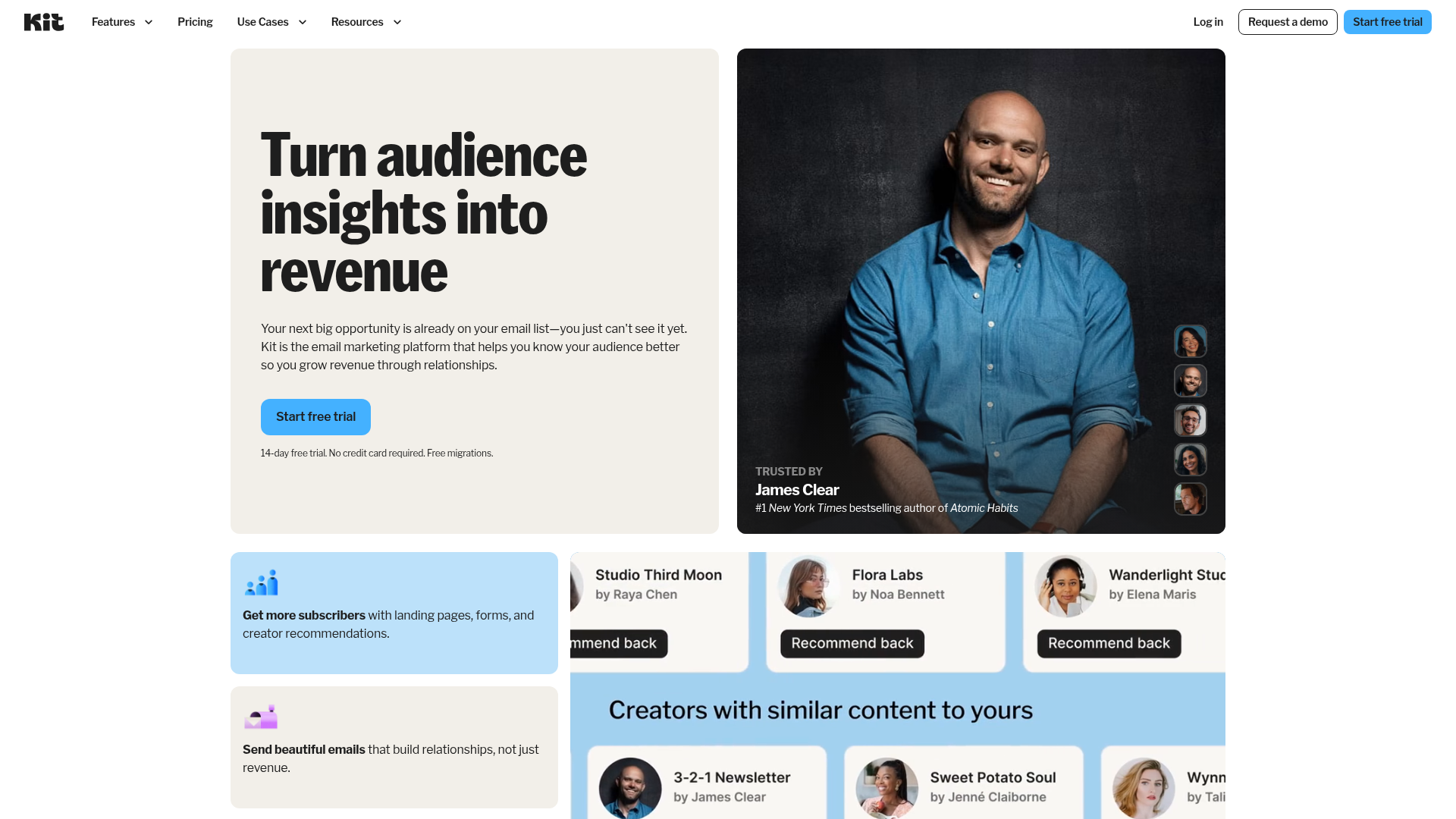
Kit (formerly ConvertKit)
- Free plan covers 10,000 subscribers before any payment is due
- Visual automation builder ties emails directly to product sales
- Tagging and segmentation built for a creator business, not just a mailing list
- Feels more like an email marketing tool than an editorial home for long-form writing
- Costs climb quickly once a list passes a few thousand active subscribers
Pick Kit when the newsletter funds a bigger creator business.
Buttondown
- Markdown editor built for people who think in plain text
- 0% platform fee, Stripe fees only, on every paid plan
- Straightforward API for writers who want to automate their own workflow
- No drag-and-drop design tools for a more visual newsletter layout
- Automations and higher-volume features sit behind pricier plans
The right size for a newsletter that should stay simple.
Verdict
Substack still wins on day-one simplicity, but its 10% cut is the real subscription tax most creators never calculate until they pass a few hundred paying fans. beehiiv is the strongest all-round replacement for growth-minded creators, Ghost for those who want to own their stack outright, Kit for creators selling products beyond the newsletter, and Buttondown for writers who just want a clean inbox tool.
How we tested
We compared each platform's public pricing pages, revenue-share terms, and aggregated reviews (G2 and Capterra for beehiiv, Ghost, Kit, and Buttondown; Trustpilot and creator migration threads on Reddit for Substack) as of September 2026, then weighted platform fees against growth and ownership features, since that trade-off is what decides a creator's actual take-home pay.