Patreon Alternatives: 5 Cheaper Ways to Get Paid in 2026
Summary
Looking for Patreon alternatives? We compared five creator platforms on fees, features and fit. Ko-fi is our pick for most solo creators, with 0% on tips and 5% on memberships. Ghost suits writers who want their own site, Buy Me a Coffee suits quick, low-friction tips, Substack suits paid newsletters and Gumroad suits digital products. Pricing was checked in October 2026.
Among the Patreon alternatives we compared, Ko-fi is the best pick for most solo creators: tips are free, memberships and shop sales cost 5%, against Patreon's 10% of earnings. Ghost wins for writers who want their own site and no cut on subscriptions. Buy Me a Coffee suits quick, low-friction tips, Substack suits paid newsletters and Gumroad suits digital products.
Patreon takes 10% of what you earn, plus payment processing, currency conversion and payout fees. On $1,000 of monthly income, the headline cut alone is $100, before the other fees. The tools below start from a lower number or give you a different kind of control.
Why are creators looking for Patreon alternatives?
Fees are the first reason. Patreon's pricing page lists 10% of income earned, and the extra charges on top change what lands in your account. Creators with small tiers feel it most, because fixed per-payment costs weigh more on a $5 pledge than on a $50 one.
The second reason is ownership. On Patreon you can export your email list, but fans still live inside Patreon's app and discovery. If you want to own your audience, you need a page, a domain or an email list that Patreon cannot switch off.
The third reason is fit. Patreon is built around monthly tiers. If you sell a template pack once, or write a weekly newsletter, a tool designed for that job is usually cheaper and simpler.
How do the fees compare on a real payment?
The headline percentage hides most of the story. Processing costs, payout fees and fixed per-payment charges all change the real cost. Here is how the five alternatives behave on the numbers their own pages publish.
Ko-fi charges nothing on tips and 5% on memberships and shop sales, or 0% with its optional Gold plan, plus normal card processing fees. Its pricing page explains the split. Third-party comparisons put the all-in cost on small payments near 11%.
Buy Me a Coffee takes 5%, plus Stripe at 2.9% and $0.30, plus 0.5% for payouts. One 2026 breakdown puts a $5 payment at roughly 14.6% all-in. Substack keeps 10% of each paid subscription, and Stripe adds 2.9% + $0.30 and a 0.7% recurring fee. On an $8 monthly plan, that is about 17.4% of the gross.
Gumroad charges 10% + $0.50 on direct sales, which is $1.50 on a $10 product, and 30% when a customer finds you through Discover. Ghost takes no cut on subscriptions, but you pay for the software instead.
Which Patreon alternative is best for memberships?
Ko-fi is the strongest all-round answer. You get tips, memberships, a shop and commissions on one page, and the fee is half of Patreon's. Creators on Trustpilot praise the fast support, and the score sits around 4.5 of 5.
The trade-off is depth. Patreon has more tools for tiers, member analytics, podcasts and community chat. If your income depends on elaborate perks, check that Ko-fi covers what you actually deliver to fans.
Buy Me a Coffee also offers memberships, with a basic example at $5 a month. It works well as a light-touch option, but memberships there are one feature among several, not the center of the product.
When does a paid newsletter beat a membership page?
If your work is mostly writing, a membership page forces you to bolt on an email tool. Substack and Ghost start from the newsletter and add payments. Your readers get posts in their inbox, and you charge for the premium ones.
Substack is free to start and puts you inside its reader app, which helps discovery. The price is the 10% fee plus processing, and a Trustpilot score around 1.4 of 5 tells you that some creators have run into support or account issues. Read the recent reviews before you commit an audience to it.
Ghost flips the model. You pay a flat price, Ghost(Pro) lists the Publisher plan at $29 a month billed yearly for up to 1,000 members, and keep the rest. The Starter plan at $23 a month does not include paid subscriptions, so check which plan you need. You also get your own site and a free custom domain.
What if you sell digital products instead of subscriptions?
Gumroad is built for this. You list an ebook, a preset pack or a course, set a price and share the link. Gumroad acts as merchant of record, so it handles sales tax collection and remittance worldwide, which saves real paperwork.
The cost is the 10% + $0.50 on direct sales. On a $9 template, that is $1.40, about 16% of the sale. On higher-priced products, the fixed part shrinks and the deal improves.
Ko-fi's shop is a cheaper route for small catalogs, since shop sales carry the 5% fee. If you sell three or four items, test both and compare what you keep after a month.
How should you move without losing your supporters?
Never switch overnight. Run both tools for one or two billing cycles, and tell your supporters exactly what changes for them. People often hesitate when asked to re-enter payment details, so give a clear reason, such as a lower fee that leaves more money for the work.
Export your email list from Patreon first, since its pricing page confirms exportable email lists. Keep that list somewhere you control. Then move your top supporters one by one, starting with the people who already write to you.
Finally, decide what you will not recreate. A dozen tiers on Patreon do not need a dozen tiers on Ko-fi. Most creators who move end up with two or three clear tiers, and an easier month-to-month story for fans.
Which one should you pick?
Pick by how you earn, not by the logo. Ko-fi fits solo creators who want low fees and a single page. Ghost fits writers who want a site they own. Buy Me a Coffee fits quick, friendly support. Substack fits newsletter-first work. Gumroad fits one-off digital products.
If none of them fits, the real cost of any platform is rarely the percentage on the pricing page. It is the time you spend working around what the tool cannot do. Test with a small group of real supporters before you move everyone.
At-a-glance
| Ko-fi | Ghost | Buy Me a Coffee | Substack | Gumroad | |
|---|---|---|---|---|---|
| Platform fee | 0% on tips, 5% on memberships and shop sales | 0% (Ghost adds no transaction fee of its own) | 5% per transaction | 10% of paid subscriptions | 10% + $0.50 direct, 30% via Discover |
| Monthly cost | $0 (optional Gold plan) | From $29/mo billed yearly for paid subscriptions | $0 | $0 | $0 |
| Core use | Tips, memberships, shop, commissions | Paid publication on your own site | Tips and light memberships | Paid newsletters | One-off digital products |
| Extra processing costs | Normal card processing fees apply | Payment processor fees still apply | Stripe 2.9% + $0.30, plus payout and international fees | Stripe 2.9% + $0.30 + 0.7% recurring | Merchant of record, handles worldwide sales tax |
| Trustpilot score (checked Oct 2026) | About 4.5 of 5 | Not checked | About 3.9 of 5 | About 1.4 of 5 | About 1.4 of 5 |
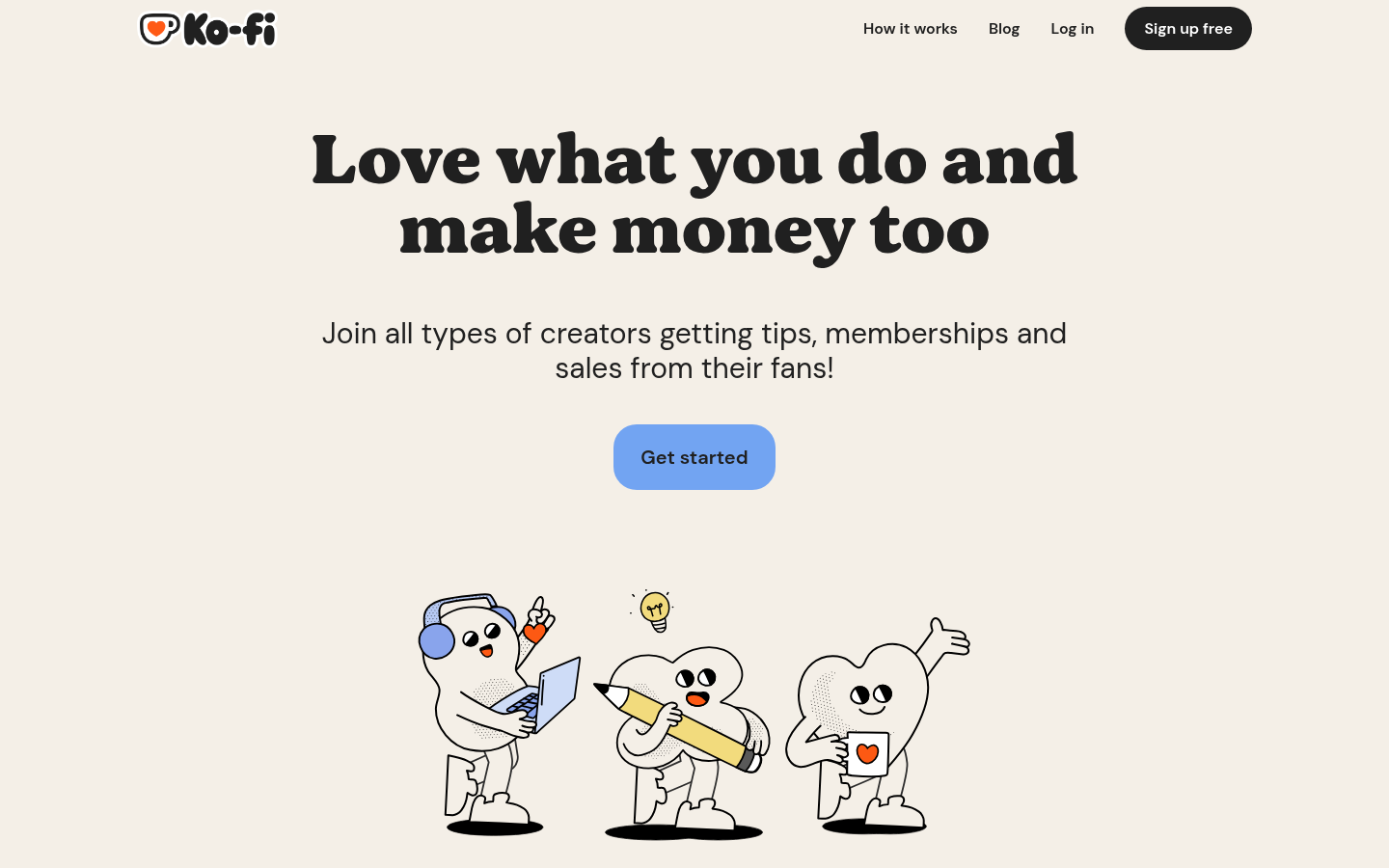
Ko-fi
- Free to join, with no fee at all on simple tips
- Memberships, shop and commissions sit on one page
- Strong Trustpilot score, around 4.5 of 5 on hundreds of reviews
- Memberships are lighter than Patreon's tier and community tools
- Normal card processing fees still apply on top of the 5%
The closest like-for-like swap for Patreon, at half the headline fee.
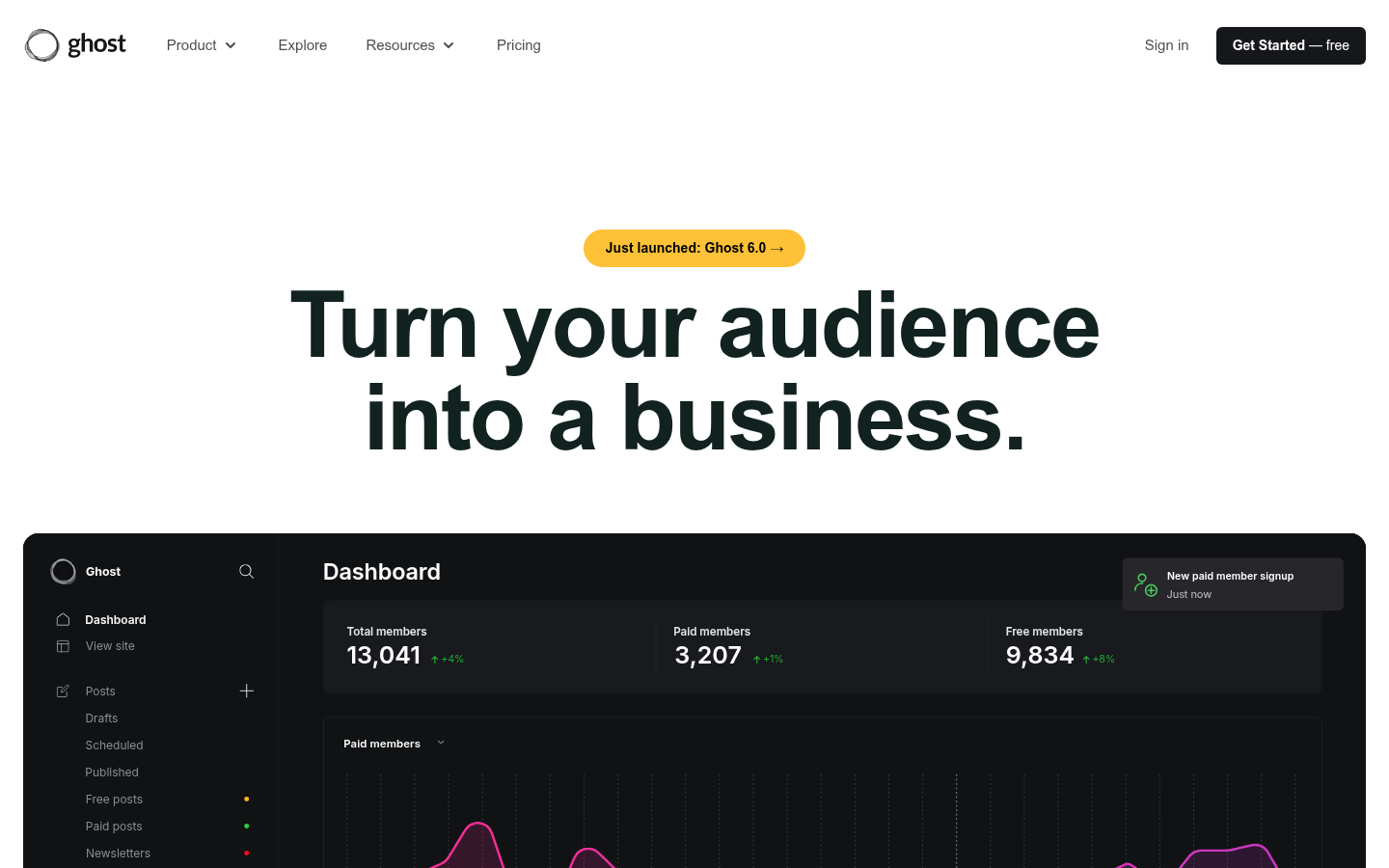
Ghost
- No transaction fee from Ghost itself on paid subscriptions
- Your own website, domain and email newsletter in one tool
- Open source, so you are never locked in to one host
- Paid subscriptions start at the $29/mo Publisher plan billed yearly
- More setup than a hosted tip page, and no built-in discovery for fans
Best if your audience reads more than it chats, and you want a site you control.
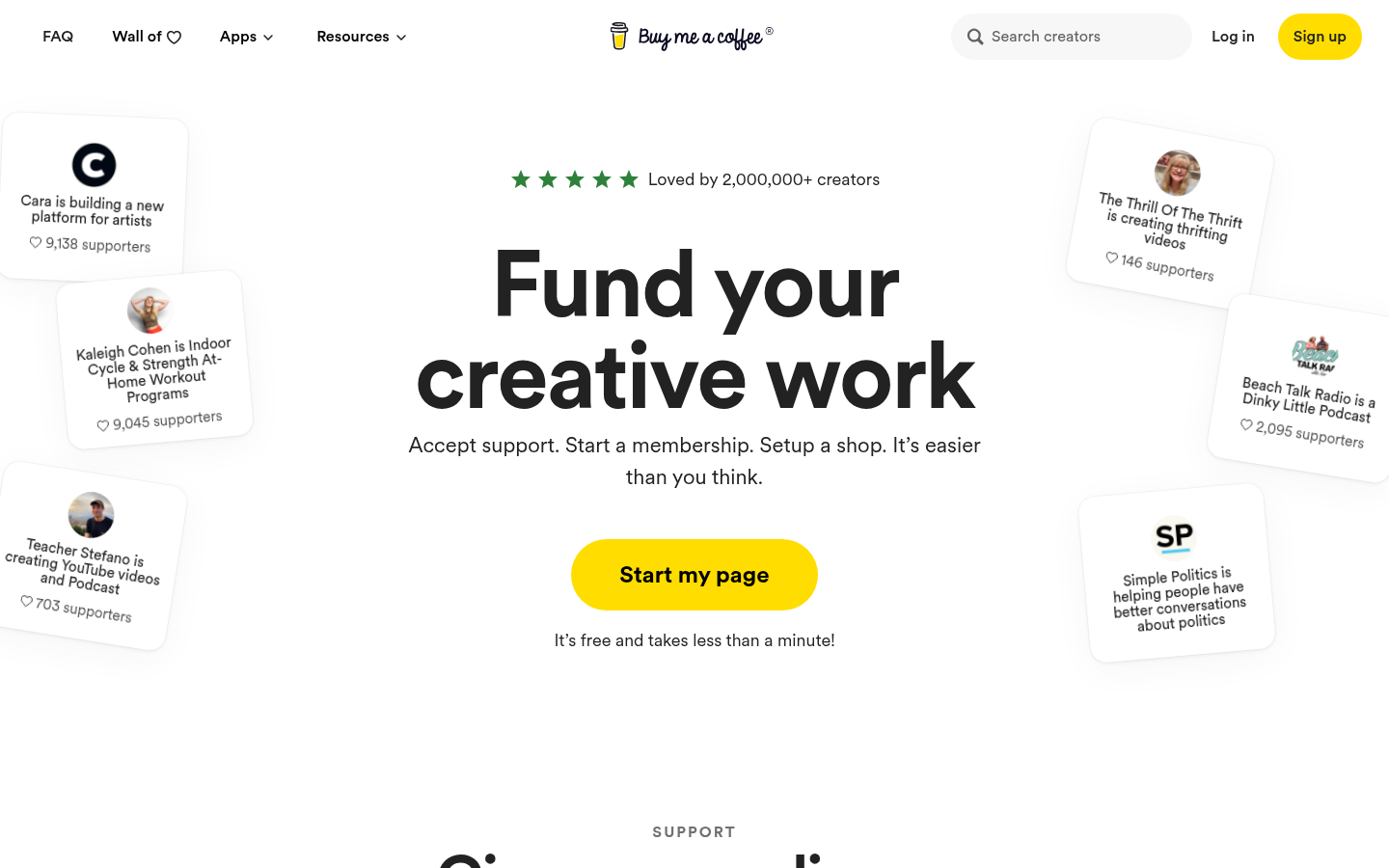
Buy Me a Coffee
- No monthly fee, with a page live in under a minute
- Tips, memberships and a digital shop on a single page
- Creators keep 95% before processing costs
- Small payments lose a lot to the fixed $0.30 processing charge
- Memberships are a feature, not a full community product
A friendly tip jar that also does memberships, but small payments get expensive.
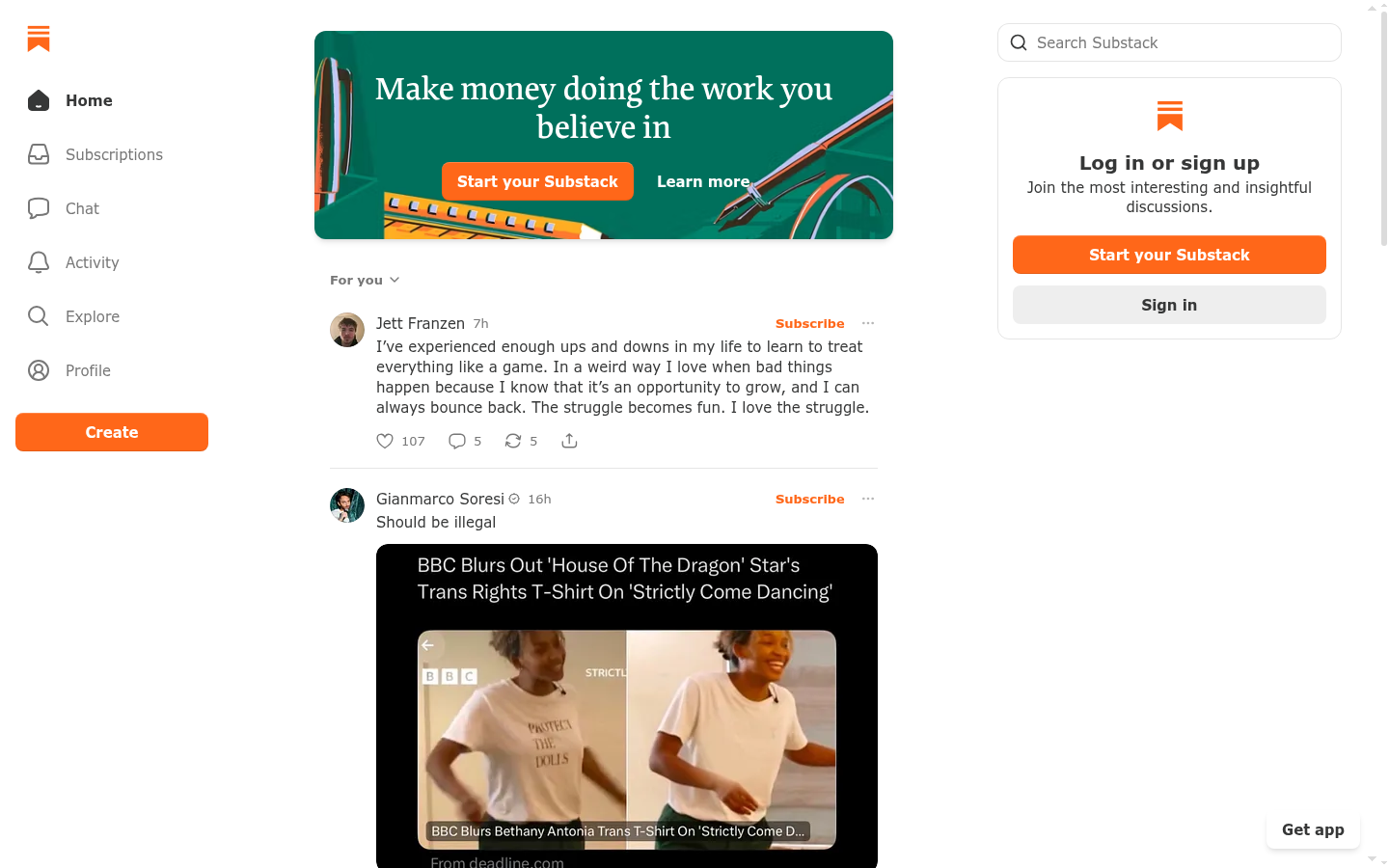
Substack
- Built for writing, with email delivery included
- Free to start, you pay only when readers pay you
- Readers can discover you inside the Substack app
- 10% fee plus Stripe's processing makes small plans costly
- Not designed for tiers, perks or a shop for fans
Great for writing-first creators, expensive for cheap monthly plans.
Gumroad
- Handles worldwide sales tax as merchant of record
- No monthly fee, simple checkout for digital products
- Memberships available for recurring products
- 10% + $0.50 per sale hurts on low-priced products
- Customers arriving through Discover cost 30% of the sale
Strong for one-off digital products, weaker for recurring fan support.
Verdict
Among the Patreon alternatives we compared, Ko-fi is the best pick for most solo creators: tips are free, memberships and shop sales cost 5%, against Patreon's 10% of earnings. Ghost wins for writers who want their own site and no cut on subscriptions. Buy Me a Coffee suits quick, low-friction tips, Substack suits paid newsletters and Gumroad suits digital products.
How we tested
We checked each platform's own pricing and help pages in October 2026, then compared fees on the same example payments. We added Trustpilot scores as a rough read on customer service, not as a quality verdict. Scores out of 5 are our editorial judgment of fit for independent creators. Heenok publishes this guide and runs its own creator platform, so we left it out of the ranking to keep the comparison about the tools listed. Fees change often, so confirm the current numbers on each pricing page before you move.