HeyGen vs Arcads: Which AI Actor Tool Wins for Creators?
Summary
HeyGen vs Arcads is really a question of course platform versus ad machine. HeyGen is a broad AI avatar tool with 175-plus language dubbing and LMS integrations, built for training and multilingual content. Arcads focuses on one thing: consistent, photorealistic AI actors for paid ad creative, with flat monthly pricing instead of a credit meter. This comparison breaks down pricing, actor consistency, languages, and integrations so creators monetizing their own audience can match the tool to the actual production bottleneck they have this month.
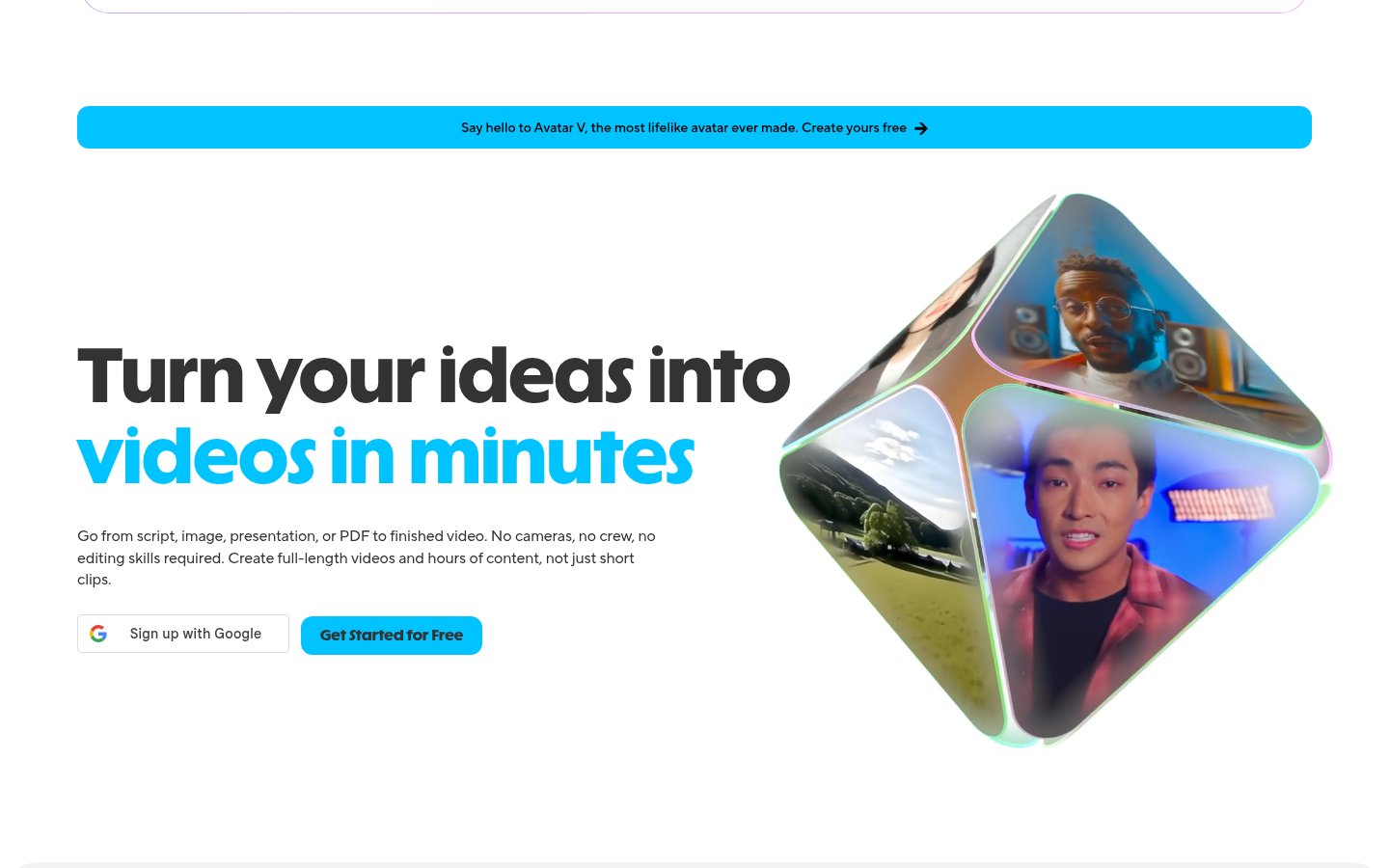
HeyGen
- Broad AI avatar and digital twin engine that covers far more than ad creative
- 175+ languages and dialects with lip-synced video translation built in
- G2 rating of 4.8 out of 5 across more than 1,880 reviews
- SCORM export and interactive video features for course and training creators
- Built as a general-purpose avatar tool, not tuned for scrappy UGC-style ad content
- Credit system on Pro and Business tiers gets expensive fast at high output volume
- Some users report UI lag and slow autosave on longer projects
Pick HeyGen when you need one platform for course videos, translated content, and marketing clips.
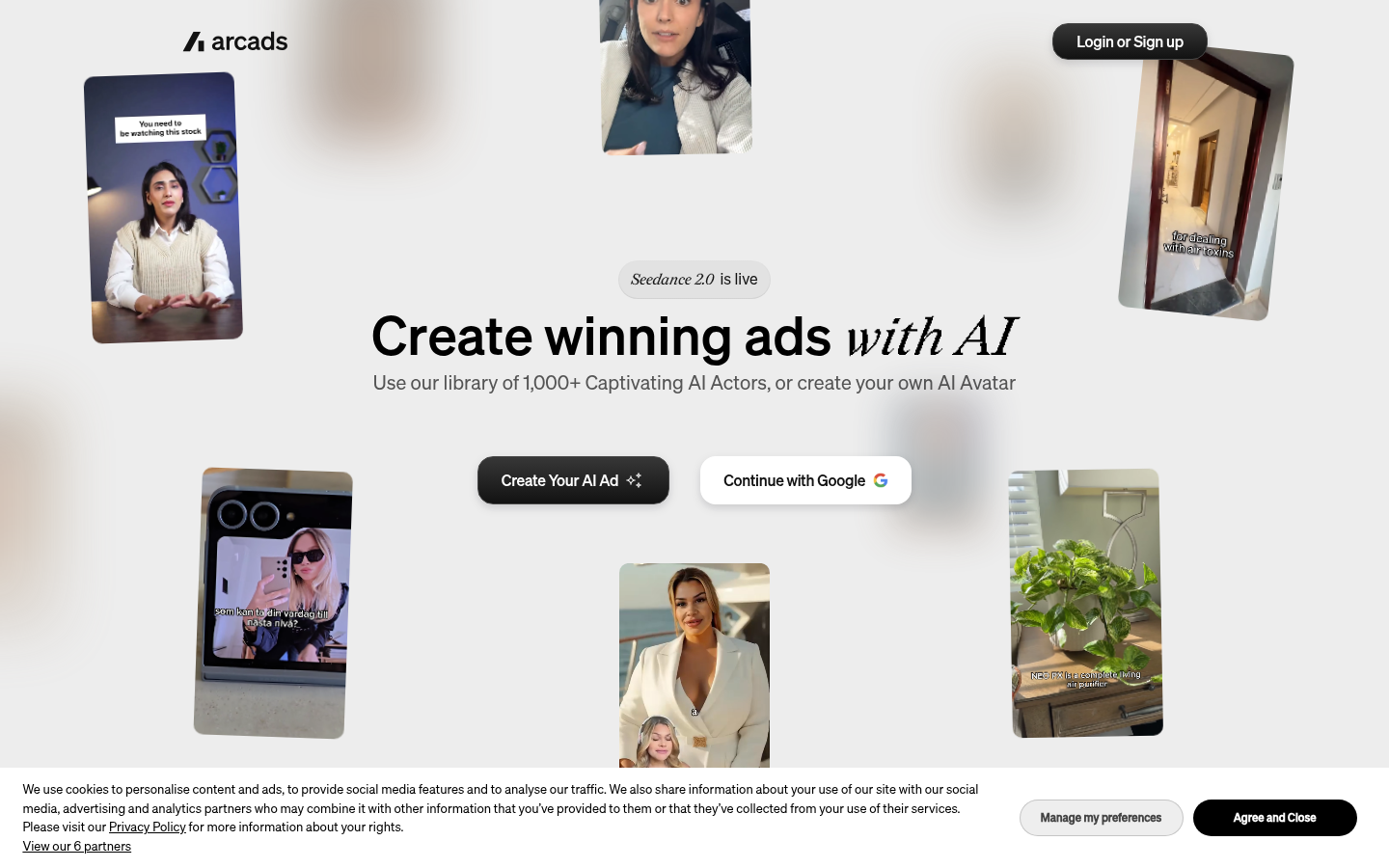
Arcads
- Generates photorealistic AI actors purely from a text description, no casting required
- Same actor stays visually consistent across every script and scene you generate
- Available around the clock, with no actor scheduling or reshoot delays
- French company, which some European creators treat as a data-privacy signal
- No permanent free tier, plans start near $99 a month once trial credits run out
- Some ad platforms flag synthetic UGC actors, so disclosure policies vary by network
Pick Arcads when your bottleneck is producing enough ad variations, not distributing courses.
At-a-glance
| HeyGen | Arcads | |
|---|---|---|
| Price | Free: 3 videos/mo. Creator $29/mo, Pro $49/mo, Business $149/mo + $20/seat | No free tier. Paid plans from around $99/mo, trial credits to test first |
| Core use case | General AI avatar and digital twin videos for training, marketing, localization | AI actors purpose-built for scroll-stopping paid UGC ad creative |
| Actor consistency | Unlimited photo avatars on paid tiers, but not the product's core focus | Prompt-to-actor engine keeps the same synthetic actor consistent across every ad |
| Languages and dubbing | 175+ languages and dialects with lip-synced video translation built in | English-first workflow, no dedicated dubbing or translation engine |
| Integrations | n8n, Make, HubSpot, Zapier on Business tier, plus SCORM export for LMS | No published workflow integrations, built around direct Meta/TikTok Ads upload |
| Customer rating | G2: 4.8/5 across more than 1,880 reviews | Not yet widely rated on G2/Capterra, strongest signal is agency case studies |
Verdict
Arcads wins for creators whose main job is pumping out paid ad variations without hiring actors. HeyGen still makes sense if you are translating course content into a dozen languages or building interactive training alongside your ads.
How we tested
We compared public pricing pages, product documentation, and G2 listings for both tools as of June 2026, cross-checked against G2 and Reddit review threads for recurring user complaints. Arcads' actor-consistency claim was checked against its own published before/after campaign examples, since neither vendor offered us a hands-on trial for this specific comparison; where a claim came only from the vendor and could not be independently verified, we flagged it as such above.
HeyGen vs Arcads comes down to one question: are you building a course platform or an ad machine? After comparing pricing, actor consistency, language support, and real user complaints on G2 and Reddit, Arcads wins for creators who need a steady supply of paid ad variations without hiring actors. HeyGen stays the stronger pick if you're translating training content into a dozen languages or running interactive courses next to your ad creative.
Why creators end up comparing these two at all
If you sell a course, a paid community, or a physical product to your own audience, you eventually hit the same wall: you need video ads, and you don't have a studio, a casting budget, or a video team. Both HeyGen and Arcads promise to solve that with AI, but they solve different versions of the problem.
HeyGen started as a broad AI avatar and "digital twin" platform. You can build a talking-head video for a course module, translate it into 175 languages, or turn a static photo into a spokesperson. Arcads has one job: generate a photorealistic AI actor from a text description and drop that actor into as many ad scripts as you need, with the same face and voice every time.
Neither is "better" in the abstract. The right pick depends on whether you're producing training content or ad creative, and how much you're spending per month on either.
Pricing: where your money actually goes
HeyGen has a real free tier: 3 videos a month, up to one minute each. That's fine for testing but not for a real ad workflow. The Creator plan at $29 a month gets you 600 credits and 1080p export; Pro at $49 a month adds 4K export; Business at $149 a month plus $20 per seat unlocks SSO and workspace collaboration. Credits burn fast once you're exporting multiple ad variations a week, so a lot of creators end up on Pro or Business faster than they expect.
Arcads has no permanent free tier. Paid plans start around $99 a month, with trial credits to test the actor quality before you commit. There's no per-minute credit system to track: you're paying for a volume of actor-driven ad generations, not a general video toolkit.
Here's the practical math: if you only need occasional avatar clips for a course intro, HeyGen's lower entry price wins. If you're running paid ads every week and need a dozen script variations tested against each other, Arcads' flat monthly cost is easier to plan around than HeyGen's credit meter.
Actor consistency: the real differentiator
This is where the two tools genuinely diverge. HeyGen gives you unlimited photo avatars on paid tiers, which is great for turning a real photo into a talking presenter. But avatar consistency across dozens of ad variations isn't the product's main design goal, it's a byproduct of a much broader feature set.
Arcads was built around exactly this problem. You describe an ideal spokesperson once (age, look, setting, style), and the same synthetic actor shows up, consistently, across every script you throw at it afterward. For a creator running five ad variations to find the one that converts, that consistency matters more than almost any other feature: your audience needs to recognize "your" ad actor across a testing cycle, the same way they'd recognize a real influencer.
If you've ever paid a freelance actor for a UGC-style ad and then needed a reshoot two weeks later because the campaign angle changed, you already know why this matters. Arcads removes the reshoot problem entirely.
Languages and localization
HeyGen's translation engine is a genuine strength: 175-plus languages and dialects with lip-synced dubbing, which matters if you're selling a course or a paid community to an international audience and want the same instructor voice in French, Spanish, and Japanese. Arcads doesn't have a dedicated localization engine; its workflow assumes an English-first (or single-language) ad script.
If your monetization model depends on selling to fans across several countries, that gap is worth weighing against Arcads' actor consistency advantage.
Integrations and workflow fit
HeyGen's Business tier connects to n8n, Make, HubSpot, and Zapier, plus SCORM export for anyone building a paid training program on top of an LMS. That's a meaningful advantage if your monetization stack already includes automation tools to manage paid subscribers or drip-fed lessons.
Arcads doesn't publish a comparable integrations list. It's built around a narrower workflow: describe the actor, generate the ad, download and upload to Meta or TikTok Ads Manager yourself. For a solo creator running their own ad account, that simplicity can be a feature rather than a gap.
Who should pick HeyGen
Pick HeyGen if your main need is training content, multilingual course delivery, or a general-purpose avatar tool that occasionally doubles as an ad generator. The G2 rating (4.8 out of 5 across more than 1,880 reviews) reflects a mature, broad product used well beyond advertising.
Watch out for the credit system if you plan to scale output. What looks affordable on the Creator plan can climb quickly once you're exporting several ad tests a week.
Who should pick Arcads
Pick Arcads if your bottleneck is producing enough ad variations to find a winning creative, not distributing a course to five languages. The prompt-to-actor workflow removes casting and reshoots from the equation, and the flat monthly pricing is easier to forecast against ad spend than a credit meter.
Budget for the fact that there's no permanent free tier; plan on the ~$99 entry point once your trial credits run out, and check the ad platform's current policy on disclosing AI-generated actors before you scale a campaign around one.
What this means if you're monetizing your own audience
Most creators reading this aren't choosing between HeyGen and Arcads for fun, they're deciding how to spend limited production budget on ads that sell a course, a membership, or a product directly to their own fans. If the constraint is "we need ten ad angles tested this month," Arcads' actor consistency and predictable pricing usually pay for themselves faster. If the constraint is "we need this course translated into six languages for a global cohort," HeyGen's localization tools do something Arcads simply doesn't offer.
The two tools aren't really competing for the same job, even though the keyword search suggests otherwise. Match the tool to the actual bottleneck in your production, not the other way around.